How We Work
Our Kitchens and Distribution Processes
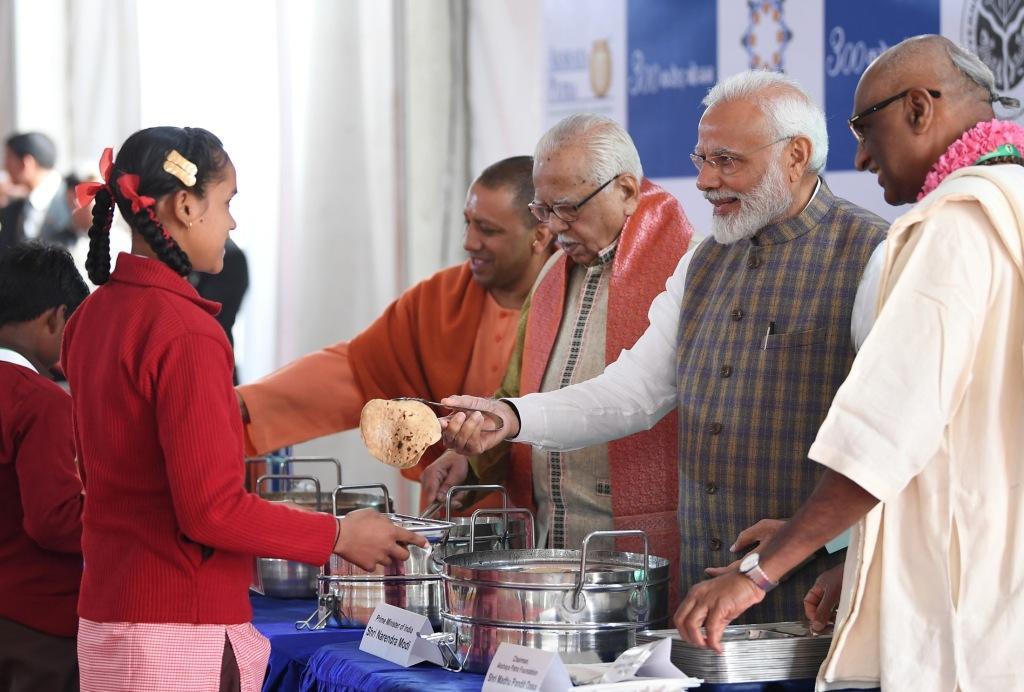
The first kitchen to execute feeding initiatives in India was established in Bangalore in the year 2000. As the demand for feeding programmes increased, the dedicated team led by the founders set up kitchens in various places across India. Currently, there are kitchens operating at 78 locations in 16 states and 3 Union Territories of India.
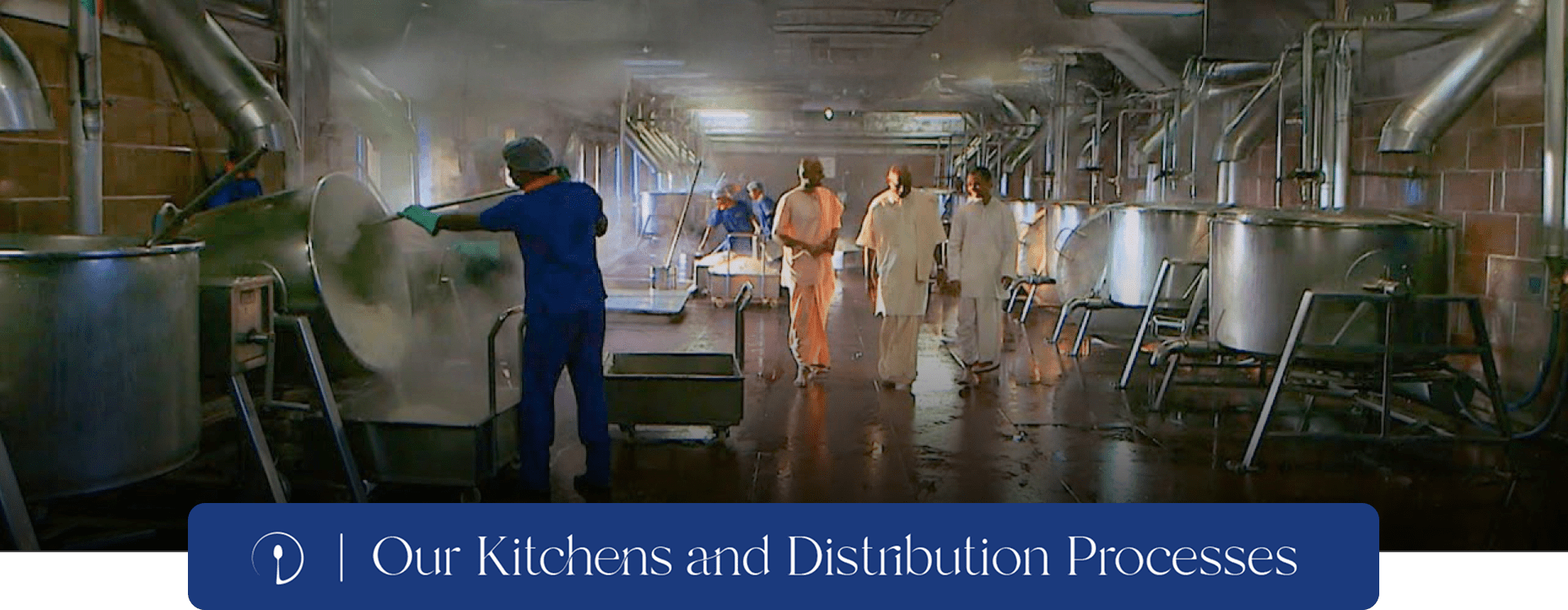
The kitchens have the capacity to undertake large-scale feeding, typically up to 100,000 meals a day, whilst ensuring safe handling, preparation and delivery of the food. These world-class manufacturing facilities have been featured in the popular television series ‘Mega Kitchens’, which aired on the National Geographic Channel.
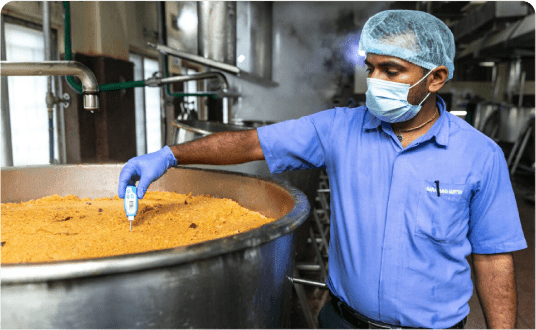
The state-of-the-art technology is used and the highest levels of hygiene are maintained in these ISO-certified kitchens. Automated equipment for large-scale cooking have been installed and policies have been established to ensure food safety. All the cooking equipment are of stainless steel 304 food-grade material and are sterilized using steam before the cooking process begins.
Specially designed and customized transport vehicles that provide optimal storage and minimal spillage are used to ensure the safe delivery of the food. Methods like logistic charting for route optimization and GPRS are used to track the delivery vehicles for safety and on-time delivery.
The following systematic processes ensure that the meals served are of the highest quality.
Quality Standards
Food Safety & Quality Management
Incoming Quality Assurance
- Raw materials comply to the Food Safety and Standards Authority of India (FSSAI) and Agmark (Agricultural Marketing), a national quality certification mark in India.
- Grains used for cooking are cleaned following a stringent process to adhere to Food Safety.
- Water used for cooking meet BIS10500 standards to ensure food safety.
Process Quality Assurance
- Selection of suitable suppliers to procure materials – adherence to Supplier Quality Management (SQM) procedures.
- Good Manufacturing Practices (GMP) compliance which improves Food Safety.
- Vessel Washing Machines are utilized to improve the quality of cleaning.
- Pest control is conducted on a regular basis to avoid food safety hazards and contamination.
- Implementation of lean management tools to mistake-proof, reduce wastages, and make the flow smooth in various processes.
Quality Management System
- Continuous monitoring and evaluation of quality is done.
- Adherence to standard quality practices to ensure that quality criteria are met.
- Qualified professionals will be hired to monitor and assess the food quality.
- Quality management practices (QMS) are followed strictly.
- All cooking and pre-processing equipment have stainless steel surfaces to improve cleanliness and ensure compliance to food safety and management standards (FSMS).
- Food safety training and modules are developed for optimum implementation of safety norms.
- Containers are air-dried after washing and sanitization.
Distribution
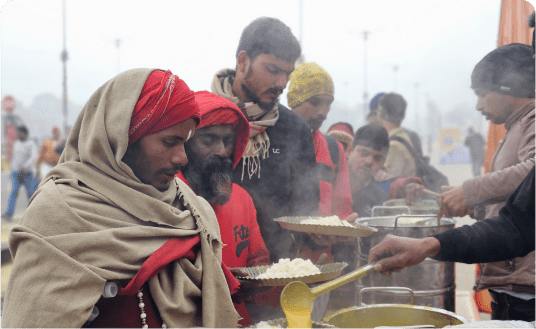
- Once the food is prepared, the temperature and consistency is checked before filling in the containers to ensure that hot meals are served to the beneficiaries. The containers are to avoid leakage and spillage.
- Custom-designed vehicles that provide optimal storage and minimal spillage are used to ensure the safe delivery of food to various locations.
Expanding Our Reach
World Food Movement Kitchens in America
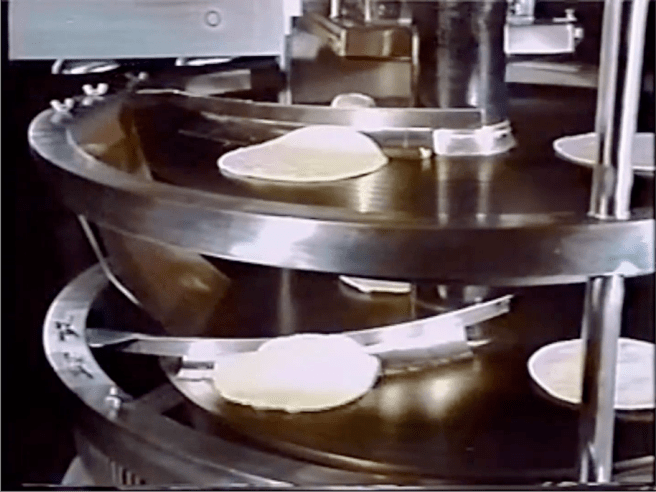
World Food Movement is also striving to follow similar processes and systems to provide the highest quality of food to its beneficiaries. As part of the kitchen set-up, we have Xpress Tortilla Making Machine, which can produce up to 1000 tortillas per hour and a combi oven that can cook up to 900 meals per session. Our Bratt Pan has the capacity to prepare up to 150 litres of food at a time. We aim to develop our kitchen infrastructure further to strengthen our menu planning and enhance operational efficiency.
The meals are packed in food-grade boxes and distributed to students in community colleges. The diverse choice of the menu makes the meals interesting and palatable to our beneficiaries. We have also created a user-friendly digital platform to make the process of food distribution seamless for students.